
Emily Daniel
Women make up half of the world’s population. Given that two-thirds of the world’s illiterate adults are women, could one of the most potent drivers of development progress across the world lie in empowering women through education? Linda Scott, an expert on women’s economic development and professor at the University of Oxford, draws attention to this ‘epic potential of empowering women’ in her book: The Double X Economy. While initially investigating the correlation between menstrual periods and school dropout rates due to a lack of sanitary pads, in Ghana, Scott discovered a deeper problem. In Ghanaian society, a girl reaching puberty and menstruation is often seen as mature enough for sexual advances. Once men find out, she can expect to be followed home from school, facing the possibility of harassment, stalking, and sexual assault.
The particular case of Ghana serves as an illustrative example of a broader societal challenge concerning the education of girls. In countries affected by fragility, conflict, and violence girls are 2.5 times more likely to be out of school than boys. While the moral reprehensibility of this is self-evident, the lack of education for women around the world also has substantial economic ramifications. The World Bank estimates that these limited educational opportunities for girls cost countries between $15 trillion and $30 trillion in lost lifetime productivity and earnings. These shocking statistics emphasise the fact that a failure to act not only perpetuates injustice for girls and women, but also represents a significant impediment to global progress and prosperity.
In addition to these economic results, the UK’s Foreign, Commonwealth and Development Office (FCDO) found women’s meaningful involvement in peace processes to be significant in obtaining and maintaining peace. Specifically, statistical analysis revealed that peace agreements crafted with significant female participation are associated with a notable 35% greater likelihood of enduring for at least 15 years. These findings highlight the pivotal role of women in fostering sustainable peace and the imperative of their inclusion in peacebuilding endeavours. In order for women to be in a position of power in these circumstances, however, they must first access education.
The individual and national benefits of empowering women through education, alongside the moral obligations, are clear. So, what is being done, and what can be done, to provide women with the resources and opportunities necessary for their education?
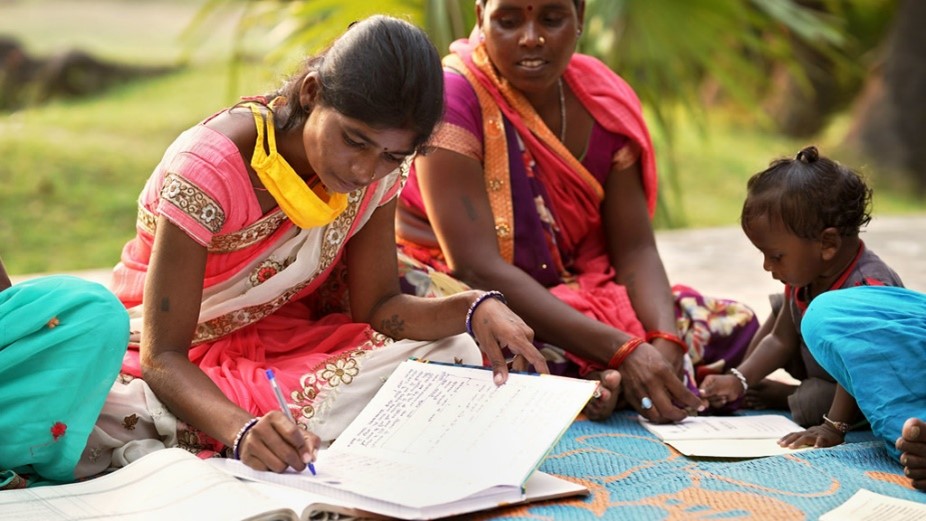
The International Women and Girls Strategy (2023-2030), published by the FCDO, outlines the UK’s strategic approach in committing to support the 3 ‘Es’—education, empowering women and girls and championing their health and rights, and ending gender-based violence. Within this, the Global Partnership for Education (GPE) is referenced, to which the UK is a key donor. The GPE is the world’s largest global fund solely dedicated to providing children with a quality education in lower-income countries. The project aims suggest that a fully financed GPE is able to play a crucial role in increasing access to education for 88 million additional children and improving learning outcomes for 175 million more children by 2025. If the aims are fulfilled, this substantial investment holds the potential to yield significant economic benefits in the developing world, potentially contributing an estimated $164 billion to economies and lifting 18 million individuals out of poverty.
As well as government strategy’s, many charities across the world are working to increase women’s access to education. The Wonder Foundation is a UK-based charity, whose mission is to empower women and girls to get the education they need to exit poverty. Central to the Wonder Foundation’s ethos is the promotion of sustainable development. By investing in local expertise and resources, the foundation facilitates long-term impact, ensuring that initiatives continue to thrive beyond the duration of external support. They work closely with local women-led partners who support their community through quality education. The partnership between Kamalini, a local partner in India, and the Wonder Foundation stands as a compelling example of the foundation’s success in fostering transformative change. Kamalini’s comprehensive approach, encompassing basic education, business skills training, vocational education, and sustainable employment placement for women in India, epitomises the tangible impact of the foundation’s support. Through financial backing and capacity building initiatives provided by the Wonder Foundation, Kamalini is empowered to effectively deliver essential services and opportunities to women, thereby catalysing their empowerment and socio-economic advancement. This collaborative endeavour serves as a beacon of success, demonstrating how strategic partnerships can translate into meaningful and sustainable change within communities.
Whilst these attempts at empowering women through education are promising, it is important to note that the fight for women’s education is not over. Continuous support for this cause, around the world, will serve as a fundamental building block for achieving sustainable development on a global scale. By investing in education for all, we pave the way for a more equitable and prosperous future for generations to come.

 Oxford Society for International Development